
The Morality of a Botany Bay Merchant
Gary L. Sturgess
1/2/20262 min read
Donald Trail and Michael Hogan are familiar to students of early NSW convict transportation. Trail was master of the Neptune (1789), the Second Fleet transport which had the worst mortality in the history of the Australian convict system and has acquired the status of an utter villain amongst Australian historians. Hogan owned and commanded the Marquis Cornwallis on two voyages, the first with convicts (1795) and the second with stores (1797), but he also sponsored several later trading operations to the colony, and employed the former NSW Corps officer, John Macarthur, as his local agent.
Both men settled at the Cape following its capture by the British in 1795, and established a variety of business ventures, sometimes together, including the importation of slaves. They had both been previously involved in illicit trading voyages between Britain and India, and through these activities, they were connected to the Anglo-Indian country trader (and later chairman of the East India Company) David Scott, and an Ostend merchant named Robert Charnock, who specialised in reflagging British ships for illicit trade with India, and smuggling their cargoes into Britain.
This clique of international merchants, who were relaxed about operating outside the law, should be of interest to convict historians for a number of reasons. David Scott owned the Barwell, which carried convicts to NSW in 1797, and Charnock the Minerva, which sailed out two years later. It is likely that when Donald Trail slipped away from the Neptune in 1792 and escaped to Ostend (when he was about to be prosecuted for killing a convict) that he went to Robert Charnock for assistance. And it is interesting that Francis Fowkes, the First Fleet convict who corruptly altered sentences whilst working in Government House under Governor John Hunter, moved to the Cape in 1801 and worked for Michael Hogan for a time before returning to England.
Michael Reidy, a South African/British historian, has just published a chapter on the unlawful and corrupt slave trading activities of Michael Hogan at the Cape of Good Hope between 1798 and 1800 - it was released just before Christmas in a collection of papers on slavery in early modern Asia.
It is rare to have such detail on the illegal activities of an 18th century merchant, with clear evidence of the subterfuge and the bribery he was willing to employ in process of doing business. In telling this story, Reidy has accessed a variety of sources - government archives, commissions of inquiry and the personal journal of a senior official’s wife.
The primary research was first undertaken almost three decades ago, for Reidy's Masters dissertation at the University of Cape Town (which looked at Trail as well as Hogan). Having abandoned the study of history for some years, he is currently completing a PhD at the Australian Catholic University, looking at the role of intermediaries in slave trading by the Dutch East India Company on the east coast of Africa. (This is also of interest to historians such as myself, who study how convict ships were managed day-to-day, and Michael and I have had many mutually beneficial discussions about our common interests.)
Reidy’s case study provides us with valuable insight into the mentality and the morality of merchants like Trail (and his employers, Camden, Calvert & King), Hogan, Scott and Charnock, who were significant players in the Botany Bay trade over its first decade and a half.
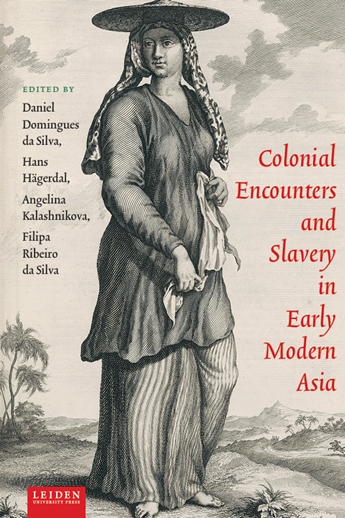
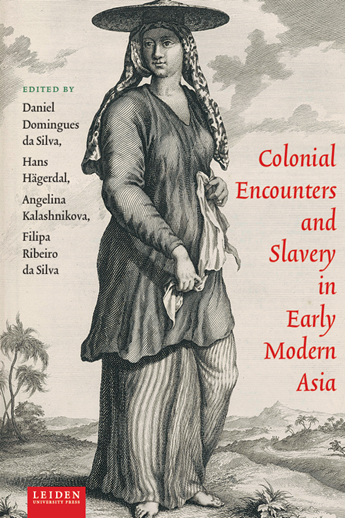
Michael C. Reidy, ‘The Case of the Collector: Michael Hogan’s Illicit Slave Trade at the Cape of Good Hope in 1800’, in Daniel Domingues da Silva et al (eds.), ‘Colonial Encounters and Slavery in Early Modern Asia’, Leiden University Press, 2025, Chapter 5.
Cover of the book in which the essay on Michael Hogan has been published
Contact us
Botany Baymen acknowledges the traditional custodians of country throughout Australia and respects their connection to land, water and community.
© Botany Baymen 2024-2026. All rights reserved.
You may download, display, print and reproduce this content for your personal or non-commercial use but only in an unaltered form and with the copyright acknowledged.
Privacy Policy

Subscribe to our latest updates
Be the first in the know. We promise no spam.