
John Hunter - How to Keep Convicts Alive
On his voyage home in 1801, the recently retired Governor, John Hunter, wrote a justification of his administration, and among other things, explained to the home government what needed to be done to keep convicts alive on the outward voyage. This newsletter examines his 'Remarks', finding that he misunderstood how convicts were managed, and that by the time they were published, the problem had been largely fixed.
Gary L. Sturgess
4/6/202617 min read
On his voyage home in 1801, John Hunter wrote a long defence of his time as Governor, and among other things, offered the Home Secretary a few thoughts on how convicts might be transported with greater humanity.
As with most naval officers at the time, his preference was for the convicts to be sent out in 44-gun warships, but he understood that while Britain was at war with France, that was simply not possible. (In fact, before and after the Anglo-French wars, which lasted from 1793 to 1815, the Admiralty still preferred to use merchant ships under contract.)
That being the case, the key to a successful voyage lay in paying the owners and ships’ officers based on the number of convicts landed rather than how many they took on board:
'. . . the interest of the owner would be to furnish them, then, with all the necessary nourishment and indulgence during so tedious a voyage, in order to land them in safety, as much as it is now the contrary.' [1]
Where that wasn’t possible, the government should have its own agents on board, either naval lieutenants as agents for transports or naval surgeons as ‘surgeon superintendents’. He noted that this system had operated successfully for a time, but had been abandoned for reasons (he said) he did not understand.
Government Agents
Hunter’s understanding was flawed. Naval agents had been sent with the Second and Third Fleets (1790 and 1791) – which both had dismal outcomes – and naval surgeons acting as surgeon-superintendents had been employed from the Royal Admiral (1792) until the Lady Shore (1797). This system had been suspended for the understandable reason that the country was at war, and naval lieutenants and naval surgeons could not be spared for a two-year voyage to and from the Antipodes.
Payment-by-Results
As Hunter recalled, following the disastrous voyage of the Neptune (1790), a number of representations had been made to the Home Secretary, Henry Dundas, arguing that the transportation contractors should be paid based on their performance.
‘Payment by results’ was then a relatively new concept in government contracting. Jeremy Bentham had discussed the use of financial incentives to align contractors’ self-interest with their public duty in 1779, and he would later make it a feature of the intended contract with the Treasury for his proposed concrete and glass penitentiary, Panopticon. [2] And in his famous ‘Speech on Economical Reform’, delivered in 1780, the Irish philosopher and Member of Parliament, Edmund Burke, had also argued that financial incentives might be used to align duty and interest in public administration:
'I know of no mode of preserving the effectual execution of any duty but to make it the direct interest of the execution officer that it shall be faithfully performed.' [3]
Henry Dundas first asked Treasury to consider payment-by-results in contracting for the Botany Bay trade in June 1791, following the disastrous outcome of the Second Fleet. Treasury thought that contractors would not accept that much risk and recommended a system where government paid a flat rate per head for the voyage, with a bonus for every convict landed alive. While this was considered for the Royal Admiral (1792), it was not adopted, possibly because negotiations for hiring that vessel were already well advanced.
However, in July 1792, when the First Fleet contractor, William Richards, submitted a proposal to carry out Irish convicts, he made it clear that he was prepared to sign a performance-based contract. As the colony’s official secretary, David Collins, noted, the voyage of the Boddington (1793) was an outstanding success:
'No ship, however, could have brought out their convicts in higher order, nor could have given stronger proofs of attention to their health and accommodation, than did this vessel.' [4]
With the Surprize (1794), Treasury shifted to performance bonuses paid to the master and the surgeon rather than the contractors. There were precedents for this in the slave trade, and Dolben’s Act, passed in 1788 to regulate the transportation of slaves, made them mandatory, with £100 for the master and £50 for the surgeon based on mortality in the Middle Passage of less than 2 percent, and £50 and £25 respectively for 3 percent or less. [5]
While the records are incomplete, it seems this system was formalised for the Botany Bay trade in 1795, and this would be one of the initiatives that would help bring mortality rates crashing down in the closing years of the 18th century.
Overcrowding the Neptune
As Hunter saw it, overcrowding was the primary cause of the deaths on the Neptune (1790), the Second Fleet transport with the highest mortality in the history of Australian transportation. Hunter was not in Sydney at the time, but as he understood it, the contractors had packed 500 men on board, ‘from pecuniary motives. . . which brought on the pestilence’. He had probably picked this idea up from Phillip, who wrote that the Neptune’s high mortality was, in part, ‘occasioned by the contractors having crowded too many on board those ships’. [6]
At the time, the acceptable crowding ratio for troop ships was two tons per head, although 1.5 tons was tolerated for short voyages. On the Neptune, it was around 1.4 tons, including convicts, soldiers and wives, for a six-to-eight-month voyage to the other side of the world.
However, the story is more complex than this. Another of the Second Fleet ships, the Surprize, was even more tightly packed, at 1.3 tons per head, yet had a much lower mortality. And at 2.3 tons per man, the Hillsborough (1798) was not at all crowded, yet it had the second highest mortality in the history of transportation.
Statistical analysis of mortality across the entire history of transportation to NSW shows no correlation between crowding and mortality. Of much greater significance was the total number of convicts on board. [7]
The Neptune (799 tons) was carrying 424 male and 78 female convicts, and the Hillsborough (781 tons), 300 men. Ships that large had three decks and the men would be housed down on the lowest level, known as the orlop deck. The logistics involved in managing such large numbers, combined with the inherently unhealthy conditions on the orlop, were significant factors in the high mortality on these ships.
But Phillip and Hunter were also wrong in blaming the contractors for the large numbers on the Neptune. It was government’s responsibility to decide how many convicts were sent on board: when the Second Fleet was first commissioned, the Navy Board set a crowding ratio of 1.7 for the convicts alone, then accepted a tender based on an even lower tonnage without adjusting the number of prisoners. [8]
Strict Confinement on the Hillsborough
Phillip had decided that the high mortality on the Neptune was also caused by the masters not allowing the (male) convicts sufficient freedom throughout the voyage:
'I believe, Sir, while the Masters of the transports think their own safety depends on admitting few convicts on deck at a time, and most of them with irons on, which prevent any kind of exercise, numbers must always perish in so long a voyage. . .' [9]
Hunter was in Sydney when the Hillsborough came in, and in his 1801 Remarks, he insisted that the high mortality was the result of the master keeping the prisoners locked down, out of an unjustified fear of an uprising:
'This alarm of mutiny is a very convenient cloak for cruelty; and if the prisoners were better treated, they would be less occasion to dread it; but it is an excuse for everything wicked that a bad man can devise.' [10]
Given that these two ships were infected with typhus brought on board from the prisons, they were always going to have high mortality. The causes of typhus and the conditions under which it spread were not understood at the time – it was not until 1909 that scientists discovered that typhus is caused by a microorganism which is transmitted by body lice. It is likely, however, that if the masters had allowed the men more time on deck, fewer would have died (discussed below).
However, Phillip and Hunter were also wrong about the risk of a convict mutiny in the first decade and a half of transportation, and far too critical of the ships’ officers in keeping the male convicts under close security.
It is understandable that Phillip made this mistake. By the time he sailed for home in December 1792, only one out of 19 ships carrying male convicts (five percent) had experienced an attempted mutiny or an active conspiracy, although the uprising on the Albemarle (1791) had been violent and had resulted in convict deaths. There had been unproven allegations of conspiracy on another two voyages.
By 1801, when Hunter sailed for home, the situation was very different. Of the 13 ships which had carried out male convicts in the years between 1793 and 1800, there had been violent insurrections on two and active conspiracies on another six (representing around two-thirds of the whole), and unproven allegations of a planned uprising on another three. There were only two ships which arrived in that period that had not had to grapple with the prospect of a convict mutiny in some form.
Phillip and Hunter had never spent time on a convict ship, and with the First Fleet, the only voyage of which they had personal knowledge, each of the transports was guarded by a detachment of marines, and the convoy was protected by two naval vessels. While there was talk of a conspiracy on one of the ships, there was no serious prospect that the convicts could have taken her and eluded their escorts.
The masters of convict transports were faced with a difficult balance: too little security and the convicts might escape or mutiny; too much and they might die from typhus or dysentery. With the benefit of hindsight, we know that the masters of the Neptune and the Hillsborough erred on the side of security, but this was not obvious at the time.
Disease Brought on Board the Alexander
Hunter didn’t mention the First Fleet, and no doubt remembered it with a warm glow. The average mortality for the voyage itself was a little over three percent, although if we add the deaths before sailing and in the three months after landing, it was almost one in ten.
However, one First Fleet ship, the Alexander, had a mortality rate quite different from the rest – 15 percent including deaths before and after, compared with six percent for the rest.
It is clear that the disease which caused these deaths was brought from the hulks, and while the surgeon-general, John White, later disputed this, there can be little doubt that it was typhus. The interventions White demanded when he first inspected the ship at Portsmouth make it clear that he feared it was ‘a putrid fever’ (typhus) rather than general debilitation and colds as he later claimed.
Around 40 percent of the Alexander’s deaths occurred before the fleet sailed from the Solent, and a similar number had died before they arrived at the Cape. Most of her convicts had been taken on board from the Woolwich hulks, and over the previous two years, more than 200 convicts had died in those hulks or at the infirmary onshore. Disproportionately, the deaths on the Alexander were amongst men from the Ceres, the hulk which had the highest mortality.
The Hillsborough had a similar pattern. One in ten died before the ship sailed, or were removed from the ship because they were seriously unwell and died over the course of the next month and a half. Two-thirds of the Hillsborough’s deaths occurred while she was in the Atlantic.
Again, this was almost certainly typhus, and it was brought on board from Newgate prison and the Fortunee, one of Portsmouth hulks. Hunter thought that the high mortality on the Hillsborough could not have been caused by disease brought on board:
'Sir Jerome Fitzpatrick Inspected the prisoners at Spithead, is an authenticated fact known to the Governor, and proves their being, at that time, healthy and fit for the voyage. . .'
He was wrong. Fitzpatrick was firmly of the view ‘that a fever was carried out in the ship by the convicts sent from Langstone’ (the inlet close to Portsmouth where the hulks were moored). [11]
Sir Jeremiah Fitzpatrick was an Irish surgeon who had served as inspector of prisons in Ireland, and with the outbreak of war in 1793, he had taken up a position in England inspecting troop ships and later convict transports. Over time, he was to have a major influence in bringing down the mortality on convict ships.
Of the 90 men sent on board from the Fortunee on 24 November 1798, 13 were sent back sick, and 34 died on the voyage. Including two that we know died after being sent back to the Fortunee, and two that died on the Hillsborough before sailing, the mortality among this cohort of Fortunee men was 40 percent. Most of the deaths amongst the ex-Fortunee men occurred in the two months after boarding, confirming that they had brought it with them.
Fitzpatrick was trying to keep the Hillsborough free of disease – on the 30th, he returned nine of the Fortunee men who’d been sent on board only six days before. He did not succeed – of the three Fortunee men sent on board as replacements on the 30th of November, two died six weeks later, after the ship had sailed.
This was not Fitzpatrick’s fault: typhus has an incubation period of several weeks, and it can be difficult to diagnose in its early stages. John Pringle, an army physician often described as the father of military medicine, wrote in 1752 that ‘The disease is not easily to be distinguished, in the beginning, from any common fever’. [12]
Once typhus had been loaded onto a convict transport, it was virtually impossible to prevent its spread. A vaccine was not developed until 1930, which meant that when a convict came down with typhus on a vessel bound for the Antipodes, there was nothing that could be done for them except to alleviate the symptoms.
Given the scale of the outbreak on the Fortunee, the Home Office should have suspended the voyage and sent the convicts back to the hospital hulks to be cared for in a controlled environment. But that would have been expensive, and Britain was at war – once a convoy had been assigned, the ship had to be ready to sail at short notice.
Sir Jeremiah had exceeded his authority in sending these men back. What he did was inconvenient, among other reasons because it required last minute changes to the paperwork, and he was instructed that he was not to do it again without the explicit approval of the Home Secretary (whose office was in Whitehall).
In the later inquiry into the mortality on the Hillsborough, the Transport Board, which was responsible for hiring and fitting out the ships, embarking the convicts and arranging the convoy, explained to the Home Secretary that:
'Nothing. . . was omitted to render the situation of the unhappy people embarked as convenient and healthful as the nature of the business would allow.'
They reminded the Home Office that they were not responsible for the health of the convicts sent on board, and concluded:
'In justice to all concerned, we are inclined to believe that the whole of this mortality might have arisen from circumstances which no human foresight could prevent, the causes being often subtle and latent, and the infection probably conveyed by means imperceptible or unknown.' [13]
Sir Jeremiah was not invited to make a submission to the inquiry. It is not difficult to understand why
An Exemplar: The Royal Admiral
In his Remarks, Hunter described the Royal Admiral (1792) as deserving ‘the palm of praise’ among convict transports, offering her to the Home Secretary as ‘a sort of model for the future instructions of the agents, masters of transports, or others, who may be entrusted with the care of the prisoners after embarkation’. He wasn’t in the colony when she arrived, but he had learned about her from ‘an intelligent person’ who’d arrived as a passenger. This was possibly Richard Alley, a naval surgeon who’d returned home with Hunter in 1791 after a prior voyage, but it was more likely John Jamieson, who sailed out on the Royal Admiral with his family to become a superintendent of convicts, and was still in the colony when Hunter returned as Governor in 1796. [14]
The Royal Admiral was well-managed, but she still had a mortality (including deaths in the three months after landing) of almost 10 percent. The Boddington and the Sugar Cane (1793) had less than one percent, but presumably there was no one in the colony who could explain to Hunter how these ships were managed.
Many of the initiatives mentioned by Hunter – involvement of the convicts in cleaning their own quarters, cooking their meals and washing their clothing, and frequent bathing and washing – were not unique to the Royal Admiral. The generous diet, which included suet pudding for dessert several days a week, were the new rations which had just been introduced for all convict ships. But the supply of boiled wheat and molasses for breakfast four days a week with rice and sugar the other three, was restricted to the Royal Admiral. On other voyages at this time, the convicts were served with sweetened oatmeal for breakfast three days a week.
There were other aspects of her management regime that were unprecedented. Richard Alley, a naval surgeon appointed as the government’s on-board agent, had previously served as a superintending surgeon on the Lady Juliana (1789), a female convict transport which had a mortality rate of just 2.7 percent. It would not be until the end of the Napoleonic Wars that surgeon-superintendents would undertake a succession of voyages, enabling them to develop the specialist expertise required for managing a ship full of convicts. As an East Indiaman, the Royal Admiral also carried a surgeon and assistant surgeon for the crew, so Alley’s responsibility was limited to the convicts and the guard.
But there was also a dedicated convict overseer on board. George Thompson had worked as a supervisor on the Stanislaus hulk and, according to Hunter, was ‘much accustomed to the people he had to deal with [and] was peculiarly well qualified for the duty’. No other convict ship carried someone with experience in managing prisoners, and there was also another supervisor on board, if required (John Jamieson).
Thompson was liberal-minded and quickly developed a rapport with the prisoners, sharing some of his personal sea stock with them. He had them select an ‘inspector’ or supervisor from among their own number and worked with this individual (who is not identified by name in the records) in managing the prison and the prisoners throughout the voyage.
He acted as a voice for the convicts, convincing the ship’s officers that a supposed conspiracy was the invention of an informant hoping to ingratiate himself with his masters and wreak vengeance on some of his fellow inmates. This earned Thompson the gratitude of the other convicts, which he was then able to use in maintaining order throughout the voyage.
It is unknown how he came to be appointed, but it is most likely that he was recruited by the ship’s captain, Essex Henry Bond, who realised that he knew nothing about the management of convicts. The Royal Admiral was a 914-ton East Indiaman with a crew of 95, which meant that Bond had the financial flexibility to pay Thompson as the notional ship’s gunner for the duration of the voyage.
In spite of Hunter’s insistence that masters and surgeons must have financial incentives based on the convicts landed alive, neither Alley nor Thompson was paid a bonus.
With rare exceptions, the ship’s log records that each day the soldiers were under arms, the convicts were all on deck, and the prison rooms were smoked or sprinkled with oil of tar (as a disinfectant). Except for a small number of men who were caught stealing, the convicts were freed from their irons before the ship had sailed from English waters.
It was usual to scour the orlop floor with dry stones rather than using water, out of a concern that the rooms would remain damp and contribute to the spread of disease. The ship’s log does not say how often the prisons were holystoned and swept, but Hunter said that convicts were assigned to sweep the prison and empty and clean the tubs used as privies, so it is likely that these chores were performed daily. This was vital in keeping down the incidence of dysentery.
Burning gunpowder in the prison and sprinkling the beams with oil of tar would have made little difference to the diseases which afflicted the convicts of the Royal Admiral – scurvy, dysentery and an unnamed fever (possibly typhus) – but given the prevailing view of medical science at the time that disease was spread by airborne particles, this was best practice.
Regular bathing would have made a difference with typhus and dysentery, and Hunter tells us that the convicts were washed and their clothes changed every Thursday and Sunday morning. Given the conventions of the day, washing probably did not involve complete immersion in a bathtub, certainly not when the ship was in colder waters. We have no information about the practice up until 1792, but the naval agent on the Kitty, which sailed the month before the Royal Admiral, was instructed to ensure that the convicts were kept clean and their clothes changed ‘as often as circumstances will admit’. [15]
As was usual on ships which carried female convicts, the women were not kept in irons and would have been allowed the freedom of the quarter deck throughout the day. Removing the shackles from the men and allowing them on the upper deck for exercise several hours each day, would have assisted in preventing the spread of typhus and dysentery. While it is not evident from the log, we know from Hunter’s Remarks and a surviving report by Richard Alley that the men were organised into six divisions and sent on deck for two-hour watches to work under the direction of a convict (chosen by themselves) who had shipboard experience. This was done to keep them busy and as a form of physical exercise. [16]
Of all the convict voyages throughout the 1790s, the First Fleet is the only other where the male convicts were (almost) all freed from their irons upon sailing. With the First Fleet, half of the men were allowed on deck at a time, while on the Royal Admiral it was 30 at a time for several hours each day. Based on what little information we have for the other ships in this early period, it seems that it was usual to leave the men single-ironed until shortly before they arrived at NSW, and to have them on the upper deck for several hours a day, weather permitting. On several of the ships in this period, the men were liberated over the course of the voyage based on their behaviour, and this approach became the norm in later years
Sir Jeremiah Fitzpatrick
By the time Hunter’s Remarks were published in 1802, the challenge of keeping convicts alive on a voyage to the Antipodes had largely been solved. Jeremiah Fitzpatrick had assumed responsibility for inspecting the convict transports in 1795, gradually increasing the interventions and regulations voyage by voyage.
He re-introduced the system of financial incentives for the ships’ surgeons, and from 1797 started issuing directions, explaining what good management looked like (and by implication, the standards against which the surgeons would be judged). The dreadful mortality on the Hillsborough resulted in the introduction of formal instructions for all masters and surgeons. From 1798, the surgeons were also required to keep journals documenting the sickness on their ships and what treatments had been given: this was an old practice and provided some transparency on how the convicts had been managed while the ship was at sea.
From 1797 until 1802, Fitzpatrick increasingly intervened in the layout of the convict quarters, with a view to better airflow, and he lobbied for windsails and ventilators, water purifiers and water closets as standard equipment on board these ships.
Statistical analysis now enables us to understand the collective impact of these measures – an aggregated mortality rate (total number of deaths divided by the total number of convicts transported for the period) of 8.2 percent for the years 1796-1800, fell to 3.1 percent in the next five years. There was another decline at the end of the Napoleonic Wars (to 0.8 percent), when naval surgeons could be spared for use as surgeon superintendents, but it was the reforms driven by the Irish surgeon and former inspector of prisons which brought about the collapse in mortality rates, not the advice offered by John Hunter. [17]
_________________________
[1] [John Hunter], Governor Hunter’s Remarks on the Causes of the Colonial Expense of the Establishment of New South Wales, London, 1802, p.47.
[2] Jeremy Bentham, ‘A View of the Hard Labour Bill’, John Bowring (ed.), The Works of Jeremy Bentham, Edinburgh, 1838-1843, Volume iv, p.12.
[3] C.F. Bahmueller, The National Charity Company, Berkeley: University of California Press, 1981, p.108.
[4] David Collins, An Account of the English Colony in New South Wales, London: T, Cadell and W. Davies, 1798 p.305.
[5] Richard B. Sheridan, ‘The Guinea Surgeons on the Middle Passage: The Provision of Medical Services in the British Slave Trade’, The International Journal of African Historical Studies, (1981) 14:4, pp.601-625, at p.610.
[6] Phillip to Grenville, 13 July 1790, UK National Archives (hereafter TNA), CO201/5/160.
[7] Gary L. Sturgess, Sara Rahman and George Argyrous, ‘Convict Transportation to New South Wales, 1787-1849: Mortality Rates Reconsidered’, Australian Economic History Review, (2018) Vol.58, No.1, pp.62-86, at p.79.
[8] London Gazette, 18 August 1789; James Bowen to the Navy Board, 29 September 1789, TNA ADM 106/243.
[9] Phillip to Grenville, 13 July 1790, TNA CO201/5/160.
[10] [John Hunter], Remarks. . ., op. cit., p.47.
[11] Stephen Rains to the Transport Board, 6 June 1800, TNA HO42/50/209-210.
[12] John Pringle, Observations on the Disease of the Army, 5th edition, London: A. Millar, 1765, p.290.
[13] Transport Board to the Duke of Portland, 11 June 1800, TNA HO42/50/177-181.
[14] [John Hunter], Remarks. . ., op. cit., p.48.
[15] Navy Board’s warrant to Daniel Woodriff, 4 January 1792, TNA ADM106/2640.
[16] [John Hunter], Remarks. . ., op. cit., p.49; Richard Alley to the Navy Board, 19 August 1792, TNA T1/753/450-451.
[17] Gary L. Sturgess, Sara Rahman and George Argyrous, ‘Convict Transportation to New South Wales, 1787-1849: Mortality Rates Reconsidered’, op. cit. Three ships with exceptionally high mortality rates, regarded as outliers, were omitted from this study – their inclusion would make the decline of the death rate after 1800 even more impressive.
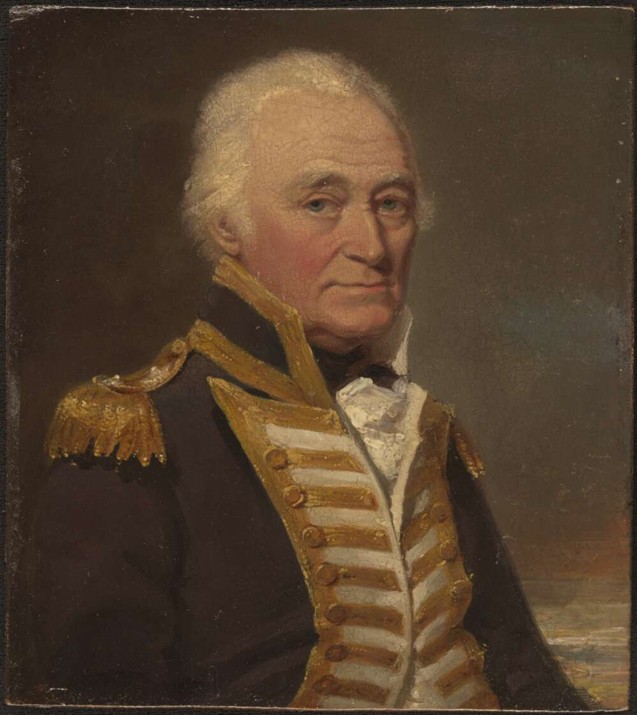
William M. Bennett, ‘Vice-Admiral John Hunter’, c.1812, oil on wood panel, National Library of Australia, NK2040
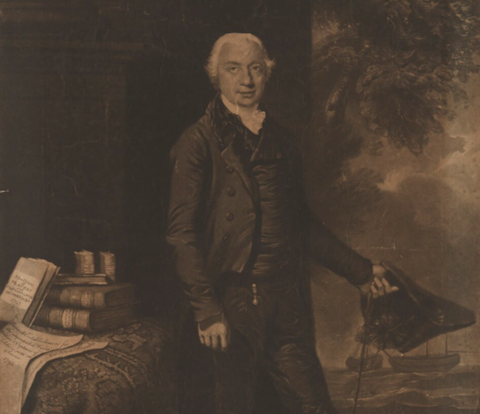
Detail of William Barnard (after Samuel Drummond), ‘Sir Jeremiah Fitzpatrick’, 1801, UK National Portrait Gallery, NPG D36947

Contact us
Botany Baymen acknowledges the traditional custodians of country throughout Australia and respects their connection to land, water and community.
© Botany Baymen 2024-2026. All rights reserved.
You may download, display, print and reproduce this content for your personal or non-commercial use but only in an unaltered form and with the copyright acknowledged.
Privacy Policy

Subscribe to our latest updates
Be the first in the know. We promise no spam.