
A First Fleet Christmas
Christmas on the Outward Voyage and the Early Years in the Colony
Gary L. Sturgess
12/25/20254 min read
Christmas at Sea, 1787
‘This being Christmas Eve we all drank a chearful Glass to the health of our Friends in England. . .’ So wrote Arthur Bowes Smyth, surgeon of the Lady Penrhyn, on the 24th of December 1787, as the ship was preparing to round the south cape of Van Diemen’s Land on the final leg of the voyage.
It was cool, around 15º Celsius in the middle of the day. This was the southern summer, but they had encountered snow and sleet four days before.
Captain Walton of the Friendship killed one of the sheep he had purchased at the Cape and sent a quarter across to the gentlemen on the Scarborough.
Christmas Day was hazy with strong gales and a great swell from the west. On the Sirius, the Judge Advocate, David Collins wrote:
'We complied, as far as was in our power, with the good old English custom, and partook of a better dinner this day than usual; but the weather was too rough to admit of much social enjoyment.'
William Sharpe, master of the Golden Grove, killed one of his hogs for the ship’s company. The chaplain, Reverend Richard Johnson, who was sailing on that ship, also wrote of an uncomfortable dinner:
'I do assure you we ate our roast pig and plum pudding with great relish, though with no less difficulty, our plates &c tumbling down, and we scarcely able to keep upon our seats.'
On the Friendship, Marine lieutenant Ralph Clark wished he was home with his wife and daughter, dining on goose and apple pie: ‘I shall have only a poor dinner here’. Several of their marines became rather drunk.
On the Prince of Wales, the non-commissioned officers dined on pork and apple sauce, a beef pie and plum pudding, topped off with several bottes of rum. Bowes Smyth wrote that he handed out currants from the box of medical necessaries, so the three marine officers and their servants, and the carpenter’s mess, could dine on plum pudding:
'The Captain allowed [the crew] a reasonable quantity of grog to cheer their hearts and to distinguish the day.'
None of the sources describes the convict Christmas, but based on later voyages and the liberality with which Arthur Phillip, the commodore of the fleet and the Governor-designate, treated the prisoners, it is likely they were given additional rations, and possibly grog and some of the medical necessaries.
There would have been a divine service of some kind – Christmas was then still a holy day as well as a holiday. And it is likely that afterwards they sang and danced. Anna King, wife of Philip Gidley King, who sailed out with a shipload of women in 1799, wrote of their Christmas:
'The ladies [and] seamen all very happy and by way of a treat they had a little dance for about two hours. It was much amusement to us to look at them. Some attempted Irish, others Scotch steps, and in truth I could scarcely made out any sort of steps, but a country jump.'
Christmas on Shore, 1788
The following year, Christmas Day would have begun with the colours being raised. This was followed by a church service, mandatory for all but those engaged in necessary duties. Thereafter the greater part of the officers adjourned to the Governor’s prefabricated house on the east side of the settlement, for dinner.
Arabanoo, an Aboriginal man who had been kidnapped and brought into camp in an attempt to establish communication with the indigenous peoples, was included in this gathering. He was terrified and refused to eat, and it was only when dinner was over that he began to cheer up. One of the young officers from the Sirius wrote: ‘it was afterwards learnt he [Arabanoo] Supposed it was intended to eat him’.
It is unclear when the new arrivals discovered the Australian native, blandfordia, which flowers in summer and is known to Australians as Christmas Bells, but John White, the First Fleet surgeon general, collected specimens, and David Collins commissioned a drawing from an unknown artist (pictured above).
Once again, the officers and gentlemen organised special meals for themselves and their households. The government fisherman, a convict named William Bryant, was kept busy in the run-up to Christmas and did a thriving trade selling black market fish to the gentlemen and the marines' families. Zachariah Clark, the assistant commissary, arranged for his blackfish to be delivered on Christmas Eve.
On Norfolk Island, the commandant, Lieutenant Philip Gidley King, declared a public holiday. The colours were raised at sunrise, King conducted the divine service (there being no minister), and the officers dined at his house.
'I gave the convicts half a pint of rum each man, & double allowance of meat to celebrate this festival & the Evening concluded with the lighting & burning Bonfires which had been previously collected for the occasion.'
Similar liberties would have been granted at Sydney Cove. While none of the records mentions Christmas at the main settlement, David Collins wrote in December 1791 that due to the scarcity of provisions, Phillip was only able to issue an additional pound of flour to each of the women, which means that in previous years, they had given somewhat more.
Among some of the convicts and marines, it was conventional to get drunk at this time of year. In 1788, a group of marines who had been systematically stealing from the commissariat, borrowed a 3 or 4 gallon keg from one of the convict women ‘against Christmas’. And in 1791, David Collins wrote that on Christmas Eve, the marine store was robbed of 22 gallons of spirits.
Two years later, after Phillip had sailed for England and the colony was being governed by the NSW Corps, Collins lamented that only 30 to 40 people had turned up for divine service. That evening had produced a watchhouse full of prisoners, several of them punished for stealing liquor from an officer.
A merry Christmas indeed!
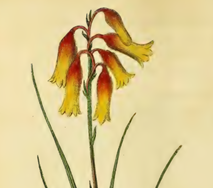
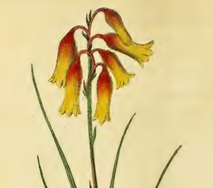
Gadyegalbaryerah of NSW (Christmas Bells), The Naturalists Pocket Magazine, (1801) Vol.6, London: Harrison, Cluse & Co, (based on a drawing brought back by David Collins in 1797)
Contact us
Botany Baymen acknowledges the traditional custodians of country throughout Australia and respects their connection to land, water and community.
© Botany Baymen 2024-2026. All rights reserved.
You may download, display, print and reproduce this content for your personal or non-commercial use but only in an unaltered form and with the copyright acknowledged.
Privacy Policy

Subscribe to our latest updates
Be the first in the know. We promise no spam.